Dreaming of pizzeria-quality pizza right in your own kitchen? The secret often lies not just in your dough or toppings, but in the magic of a Large Pizza Stone. This versatile kitchen essential can transform your homemade pies, giving them that coveted crispy crust and perfectly cooked interior you crave. But beyond just making great pizza, a generously sized stone opens up a world of culinary possibilities, making it a must-have for any home chef who loves to entertain or simply enjoys big, delicious meals.
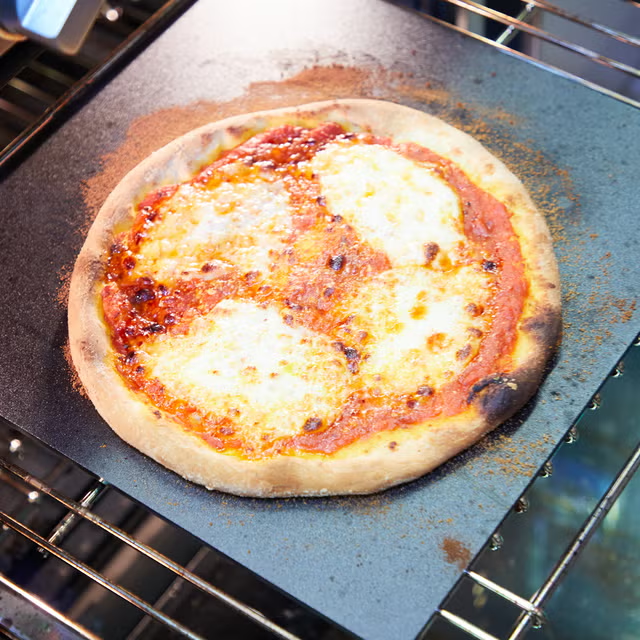
The Power of a Large Pizza Stone: Why Size Matters
Why opt for a large pizza stone? Imagine crafting a magnificent, family-sized pizza that feeds everyone without multiple baking rounds. That’s the primary allure of a large pizza stone. Unlike smaller counterparts, a substantial stone provides ample surface area, allowing you to bake bigger, more authentic pizzas, artisanal breads, or even a medley of roasted vegetables all at once. It’s about more than just convenience; it’s about achieving superior, consistent results across your entire bake.
When you’re launching a pizza onto a super-hot surface, a larger stone offers a more forgiving target, reducing the stress of a potential “pizza catastrophe” and ensuring your masterpiece lands perfectly. It’s also incredibly versatile, accommodating various shapes, from classic rounds to rectangular sfincione, or even multiple smaller items simultaneously. This generous space ensures that every inch of your dough gets direct, even heat, leading to a uniformly crispy base that smaller stones might struggle to deliver for larger creations.
Unearthing the Legacy: A Brief History of Pizza Stones
The concept of baking on a super-heated surface is as old as bread itself. Ancient cultures used hot rocks or hearths to bake flatbreads, laying the groundwork for what we now recognize as the pizza stone. Fast forward to the modern era, and the humble baking stone has become a staple for home cooks seeking to replicate the intense, direct heat of traditional brick or wood-fired pizza ovens.
Early pizza stones were often simple unglazed ceramic or clay tiles. As the art of home pizza-making grew, so did the innovation in baking surfaces. Today’s large pizza stones are engineered with advanced materials designed for extreme durability, superior heat retention, and efficient moisture absorption. While the core principle remains the same – to provide a scorching hot base for quick, even baking – the evolution of materials has made these tools more effective and accessible than ever, allowing you to bring a piece of that ancient, authentic baking tradition into your contemporary kitchen.
Decoding Your Options: Types of Large Pizza Stones
When it comes to choosing a large pizza stone, you’ll encounter a variety of materials, each with its unique characteristics that influence performance, durability, and care. Understanding these differences will help you select the perfect large pizza stone to match your baking ambitions.
Cordierite Pizza Stones
Cordierite is a mineral-rich ceramic known for its excellent thermal shock resistance, making it less prone to cracking from sudden temperature changes. This material absorbs and retains heat exceptionally well, providing a consistent baking temperature and drawing moisture from the dough for a delightfully crispy crust. Cordierite stones are porous, which aids in evaporation and prevents sogginess. They are a popular choice for their balance of durability and performance. A common thickness for effective heat retention is around 15 millimeters.
Ceramic Pizza Stones
Traditional ceramic stones are also effective at heat retention and transfer. However, they can be more susceptible to thermal shock compared to cordierite, meaning they require careful preheating and cooling to prevent cracks. Glazed ceramic options offer easier cleaning, as they are non-porous and can often be washed with soap (check manufacturer instructions). However, the glaze might affect the characteristic moisture-wicking property of unglazed stones.
Pizza Steels
While not technically “stones,” pizza steels are a formidable alternative, especially for those seeking the crispiest crust imaginable. Made from low carbon steel, these heavy-duty slabs heat up faster and retain heat for longer than most stones. Their incredible thermal conductivity transfers heat rapidly to the pizza, often resulting in an even crispier bottom. Steels are virtually indestructible and immune to thermal shock, though they are significantly heavier and require specific cleaning (no water for some, to prevent warping, and no dishwasher). For a professional-level crisp, many home pizzaiolos swear by steel.
Cast Iron Pizza Pans
Cast iron pizza pans offer another robust option. Like pizza steels, they are highly durable and excel at absorbing and distributing heat evenly. Often pre-seasoned, they provide a naturally non-stick surface over time and can be used for much more than just pizza, including searing meats or roasting vegetables. They tend to be heavy and require care similar to other cast iron cookware, typically meaning no dishwasher and careful drying to prevent rust.
Soapstone Pizza Stones
Less common but highly effective, soapstone pizza stones are natural stones known for their exceptional heat retention and smooth, non-porous surface. They cook pizza quickly, producing a very crispy crust, and are easier to clean than porous man-made stones. They can also maintain stable, even temperatures. However, as a natural stone, they may be prone to surface cracks, and often come with no warranties.
Here’s a quick comparison to help you choose:
| Material | Heat Retention | Durability (Thermal Shock) | Cleaning | Weight | Typical Crust Outcome |
|---|---|---|---|---|---|
| Cordierite | Excellent | High | Scrape, wipe damp cloth (no soap) | Moderate | Crispy, airy |
| Ceramic | Good | Moderate (prone to crack) | Scrape, wipe damp cloth (some glazed allow soap) | Moderate | Crispy |
| Pizza Steel | Superior | Very High (indestructible) | Specific instructions (no water for some) | Heavy | Ultra-crispy, charred |
| Cast Iron | Excellent | High | Hand wash, dry, season (no dishwasher) | Heavy | Crispy, can be slightly chewier |
| Soapstone | Excellent | High | Easy to clean, non-porous (no soap needed) | Moderate | Very crispy, fast cooking |
Mastering the Art: A Step-by-Step Guide to Using Your Large Pizza Stone
Using a large pizza stone effectively is key to unlocking its full potential. While it might seem intimidating at first, the process is straightforward once you get the hang of it.
1. Placement in the Oven or Grill
Always place your large pizza stone in a cold oven or grill. For most home ovens, positioning it on the middle rack is a good starting point for even baking. If your oven has a broiler, placing the stone on the top rack, closer to the broiler, can help char the top of your pizza for a more authentic, wood-fired effect. Ensure there’s adequate clearance around the stone for air circulation. For grills, place it on the cold grates.
2. Preheating is Paramount
This is arguably the most critical step. Gradual heating prevents thermal shock, which can cause your stone to crack. Turn your oven or grill to its highest temperature setting (ideally 500-550°F or even higher if your oven allows). Let the stone preheat with the oven for at least 45 minutes to an hour, or even longer for very thick stones. This ensures the stone reaches and saturates with enough heat to instantly crisp your pizza crust upon contact. If using a broiler, turn it on for the last 15-20 minutes of preheating to get the stone extra hot, then switch it back to bake when launching.
3. Prepping Your Dough and Toppings
While the stone preheats, prepare your pizza. Roll out your dough to your desired thickness, ensuring it’s slightly smaller than your large pizza stone to avoid spillover. For a truly Neapolitan-style pizza, keep toppings light to prevent sogginess and facilitate quicker baking.
4. The Art of Launching
This is where a pizza peel becomes your best friend. Lightly dust your pizza peel with semolina flour or a 1:1 mixture of cornmeal and all-purpose flour. This creates a non-stick barrier. Quickly assemble your pizza directly on the dusted peel. Once your pizza is ready, open the oven door, position the peel at a slight angle at the very back of the hot stone, and with a swift, confident jerk, slide the pizza off the peel and onto the stone. Practice this motion with a damp towel on your peel before your first real pizza!
5. Baking Time and Indicators
Baking time will vary depending on your oven’s temperature, dough thickness, and desired crispness. For a thin-crust Neapolitan-style pizza at high heat, it might be as quick as 5-6 minutes. Look for a golden-brown, slightly charred crust and melted, bubbly cheese. You can lift the edge of the pizza with your peel to check the bottom for browning.
6. Removing the Pizza
Once baked to perfection, use your pizza peel to carefully slide the pizza off the stone and onto a cutting board. Let the pizza rest for a minute or two before slicing to allow the cheese to set and prevent toppings from sliding off. Remember, never cut directly on your pizza stone, as it can scratch the surface or push debris into the pores, leading to burning during future use.
Chef’s Secrets: Tips and Tricks for the Perfect Large Pizza
Even with the right equipment, a few insider tips can make all the difference in achieving pizza perfection with your large pizza stone.
- Go Easy on the Cornmeal/Semolina: While crucial for launching, too much cornmeal or semolina can burn on the hot stone and impart an undesired flavor or texture. Use just enough to prevent sticking.
- Don’t Overcrowd Your Pizza: Especially with a large stone, it’s tempting to load up on toppings. However, excess moisture from too many toppings will steam your pizza rather than crisp it, increasing baking time and risking a less-than-crispy crust.
- Harness the Broiler: For that ultimate charred top, use your oven’s broiler. After preheating, some experts recommend turning down the oven temperature slightly, then cranking it back up with the broiler on just as you launch the pizza. This encourages the broiler to stay on longer, providing intense top-down heat.
- Mind the Bubbles: If your dough starts to bubble excessively, gently pierce it with a fork or the tip of your peel to release trapped air, ensuring an even bake.
- Frozen Pizza on a Stone (with caveats): While some sources suggest placing frozen pizza directly on a stone, others warn against it due to the risk of thermal shock if the stone is already hot. It’s safer to thaw frozen pizzas first or place them on a cold stone and preheat together, though the porous nature of the stone can help absorb ice crystals.
- Rotate for Evenness: If you notice one side of your pizza baking faster than the other, gently rotate it halfway through baking using your pizza peel.
Beyond Pizza: The Versatility of Your Large Baking Stone
Your large pizza stone isn’t a one-trick pony; it’s a versatile baking companion ready to tackle more than just pizzas. Its ability to hold and transfer high, even heat makes it ideal for a variety of other culinary creations.
- Artisanal Bread: Achieve a professional-grade crust and impressive oven spring on your homemade loaves, baguettes, or ciabatta. The stone mimics a traditional bread oven, providing consistent heat from below.
- Roasting Vegetables: Arrange vegetables like asparagus, broccoli, or bell peppers directly on the preheated stone for beautifully caramelized edges and tender interiors.
- Baked Goods: From giant cookies to flaky biscuits, a large baking stone can provide a more even bake than a standard baking sheet, resulting in perfectly browned bottoms.
- Searing Meats: Some robust stones and all steels can be used to sear steaks, chicken, or fish, creating a fantastic crust similar to cooking on a cast iron skillet.
Embrace the versatility and experiment with different dishes to truly make the most of your large pizza stone.
Longevity is Key: Care and Maintenance for Your Large Pizza Stone
Proper care is essential to ensure your large pizza stone remains a faithful kitchen companion for years to come. Neglecting it can lead to cracking, strange odors, or reduced performance.
- Cool Down Completely: Always, always allow your pizza stone to cool down completely in the oven before attempting to clean or move it. This can take several hours, so leaving it overnight is often the safest bet. Cleaning a hot stone is not only dangerous but can also induce thermal shock and cause it to crack.
- Say NO to Soap: Most pizza stones are porous and will absorb soap, which can then impart unpleasant flavors to your food in subsequent uses. Avoid detergents entirely.
- No Soaking or Dishwasher: Never soak your pizza stone in water or put it in the dishwasher. The stone can absorb water, weakening it and making it highly susceptible to cracking when exposed to high heat again.
- Scrape and Wipe: For cleaning, simply use a stiff brush or a bench scraper to remove any burnt-on food particles or crumbs once the stone is cool. Then, wipe it down with a damp cloth and let it air dry completely before storing.
- Embrace the Patina: Over time, your pizza stone will develop dark spots and discoloration, known as a patina. This is completely normal and is a sign of a well-loved, well-used stone. It will not affect performance and does not indicate an unclean stone.
- Preventing Cracks: Beyond gradual heating and cooling, handle your large pizza stone with care. Avoid dropping it or hitting it forcefully with utensils like your pizza peel, as this can create weak points that lead to cracking. When storing, ensure nothing heavy is placed on top of it.
Frequently Asked Questions (FAQ)
How big should a large pizza stone be?
The ideal size for a large pizza stone depends on your oven or grill. Rectangular stones around 15×12 inches or 16×14 inches are popular as they maximize oven space and can accommodate both large round and rectangular pizzas. Always measure your oven racks before purchasing to ensure a comfortable fit.
Can I use a large pizza stone on a grill?
Absolutely! Many large cordierite and steel pizza stones are suitable for use on a grill. Place the stone on cold grill grates, then preheat slowly to high heat. It’s a great way to get extra high temperatures for a crispier crust, especially in gas or charcoal grills.
How do I prevent my large pizza stone from cracking?
The most crucial step is to avoid thermal shock. Always place the stone in a cold oven or grill and allow it to preheat and cool down gradually with the appliance. Never place a cold stone into a hot oven or a frozen pizza onto a scorching hot stone. Handle it gently to avoid accidental impacts.
Is a pizza stone or a pizza steel better for large pizzas?
Both are excellent, but they have subtle differences. Pizza steels heat up faster and retain heat for longer, often delivering an exceptionally crispy, almost charred crust, making them ideal for high-heat pizza styles. Pizza stones (especially cordierite) also provide a very crispy crust and are excellent for bread baking due to their moisture-absorbing properties. Steels are generally more durable and won’t crack, but are heavier and typically more expensive.
How often should I clean my large pizza stone?
You should clean your pizza stone after every use, but this doesn’t mean a deep scrub. After it has completely cooled, simply scrape off any burnt-on food bits and wipe it with a damp cloth. Deep cleaning with soap or excessive water should be avoided.
Can I put a frozen pizza directly on a hot large pizza stone?
It’s generally not recommended. Placing a cold or frozen pizza directly onto a very hot stone can cause thermal shock, leading to cracks. While some sources suggest it can be okay, it’s safer to thaw your pizza first or place it on a cold stone and allow them to heat up together slowly, although this may not yield the crispiest result.
What are the signs of a good quality large pizza stone?
A good quality large pizza stone will be made from durable materials like cordierite or steel, providing excellent heat retention and distribution. Look for a substantial thickness (10-15mm or more) for better heat retention between bakes. Rectangular shapes often offer more versatility and usable baking space than round ones.
Conclusion
Embracing the large pizza stone is more than just buying a new kitchen gadget; it’s an investment in countless delicious meals and a journey into the heart of authentic home baking. From crafting expansive, crispy-crusted pizzas for family gatherings to baking artisan loaves that fill your home with an intoxicating aroma, a quality large pizza stone is a game-changer. It bridges the gap between a standard home oven and a professional brick oven, making those once-elusive perfect results a reality. So, equip yourself with the knowledge, choose your ideal large pizza stone, and prepare to ignite a new passion for culinary creativity. Your taste buds—and your guests—will thank you for it!